


Cathay Biotech’s Bio-based Composites Power Technological Innovation in Aviation Temperature-Controlled Containers
 Date:2025-03-10
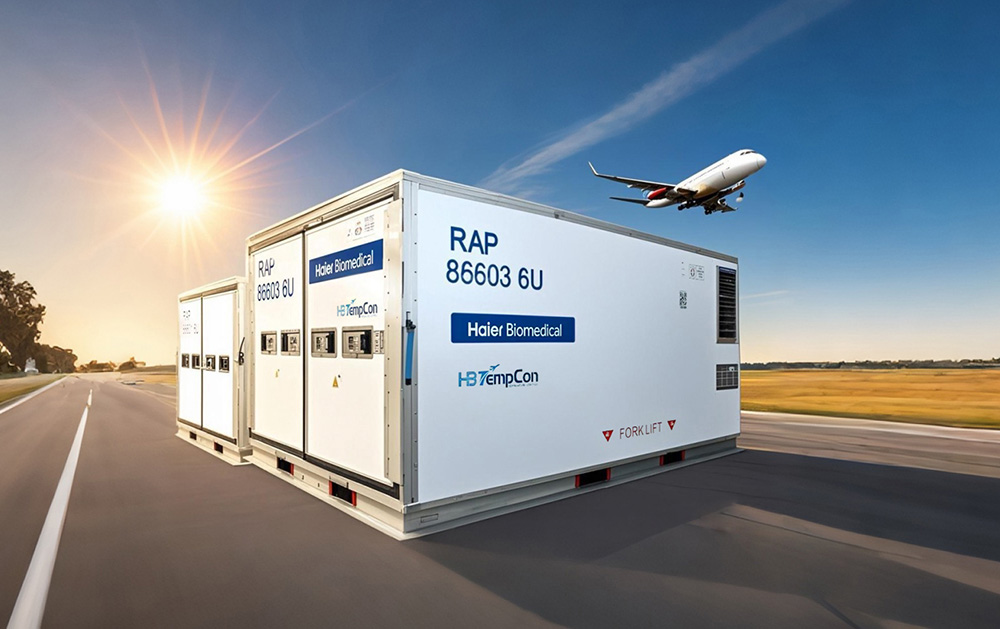
In January 2025, the RAP-AT1 active aviation temperature-controlled container developed by Qingdao HB TempCon Aviation Co., Ltd., a subsidiary of Qingdao Haier Biomedical, passed the airworthiness review of the Civil Aviation Administration of China (CAAC) and obtained the CTSO Authorization (CTSOA), officially entering commercial service. This achievement is not only a major technological breakthrough in China's aviation cold-chain equipment sector, but also a landmark achievement in developing modern specialized transport equipment as part of the “14th Five-Year Plan for Aviation Logistics Development”.
As one of the core suppliers to Qingdao HB TempCon for its active aviation temperature-controlled containers, Cathay Biotech provided low-carbon, high-performance continuous fiber-reinforced thermoplastic bio-based polyamide composites, helping the RAP-AT1 excel in weight reduction, insulation performance and structural strength. While maintaining efficient insulation, high strength and abrasion resistance, the container effectively reduces energy consumption and carbon emissions of air transport, providing strong support for the green and sustainable development of the aviation cold chain. At the certificate presentation ceremony, Cathay Biotech received a letter of thanks from Qingdao HB TempCon.
Cathay bio-based composites represent a new type of high-performance bio-based thermoplastic composite. Their matrix resins can utilize different types of bio-based polyamides, including low-temperature long-chain, medium-temperature and high-temperature grades. Thanks to their excellent melt flowability, they can be compounded with high proportions of continuous glass fiber/carbon fiber; their strength and modulus are comparable to those of metals, while their density is only 1/4 of steel and 2/3 of aluminum, with lower carbon emissions. They have broad application prospects in fields such as new energy, construction, and transportation and logistics, and are expected to achieve “Replacing Steel with Plastics, Replacing Aluminum with Plastics, Replacing Thermoset with Thermoplastic” in large structural components, providing cost-effective products while bringing green, low-carbon technology solutions to traditional industries.
The successful application of bio-based composites in aviation temperature-controlled containers has laid the material cornerstone for technological upgrading and product innovation in the aviation cold-chain industry. Looking ahead, Cathay Biotech will continue to cooperate closely with partners from various fields, providing green, low-carbon, high-performance sustainable solutions, and jointly driving industrial innovation and development in more downstream sectors.