


Green Products
With the vision of “Reshaping Low-Carbon Living Through Bio-Manufacturing”, we firmly believe that biomanufacturing is an effective path to solving the issue of carbon neutrality.
To meet the growing market demand for sustainable and green solutions, we continuously develop application scenarios for bio-based products, focus on green renewable raw materials and carbon footprint reduction solutions, and provide breakthrough technologies and solutions through continuous innovation. We strive to offer customers more competitive sustainable solutions and promote the development of the industrial chain toward green and low-carbon transformation.
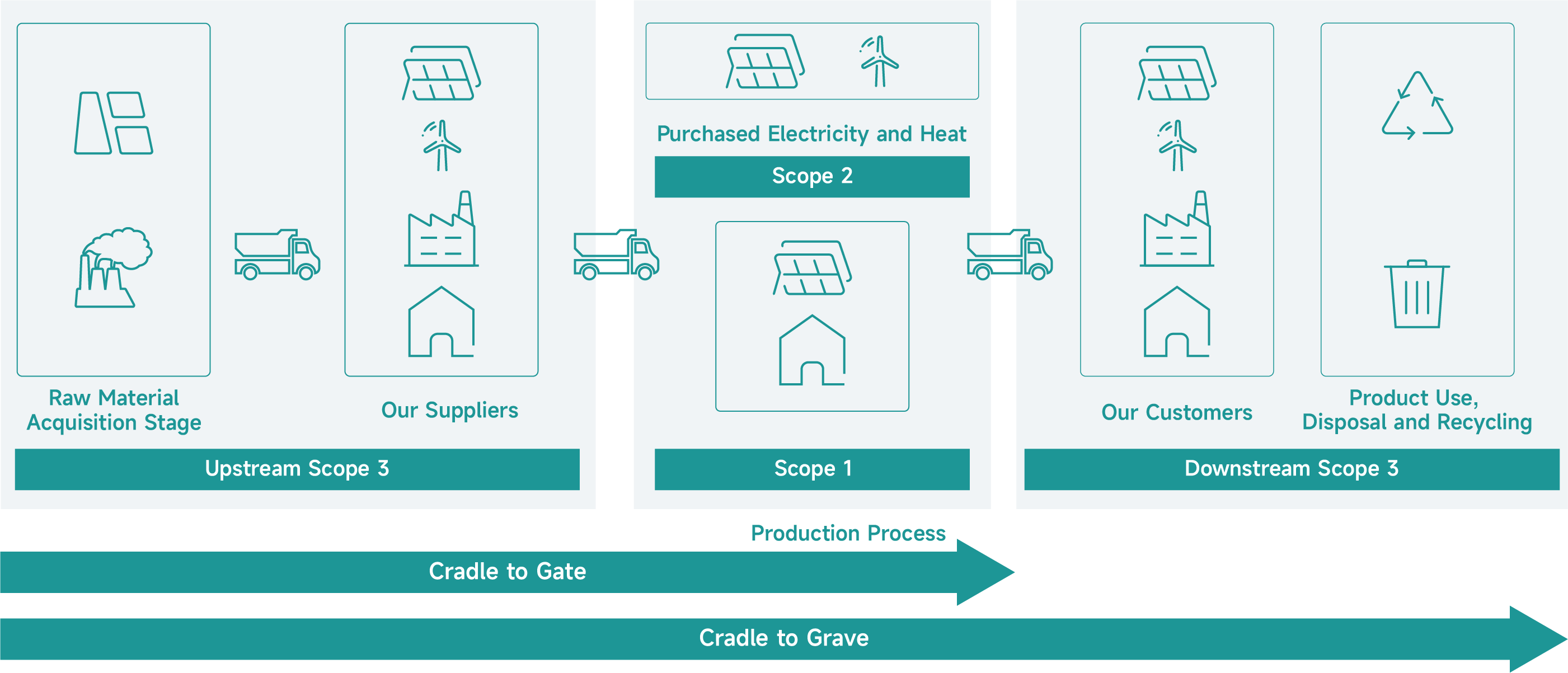
We Continuously Conduct Life Cycle Assessment
Product scope: long-chain dicarboxylic acids and polyamides, including DC10-16 and PA series
Functional unit: 1 ton of product produced by Cathay
System boundary: total carbon emissions from cradle to gate, including raw material acquisition, raw material transportation and the production stage
Verification standards: ISO 14044:2006 and ISO 14040

Low-carbon Dicarboxylic Acid
At present, Cathay has launched low-carbon green dicarboxylic acids by continuously improving production processes and combining them with efficient biomanufacturing processes. Verified by an independent verification body and based on ISO 14040:2006 and ISO 14044:2006 standards, the carbon footprint of our bio-based sebacic acid can be reduced by more than 40% compared with castor-oil-based sebacic acid.
Learn More

Polyamide
In our polyamide 56 production, we use self-produced fully bio-based pentanediamine (DN5). Compared with petroleum-based polyamide 66 (PA66) produced through chemical processes, its carbon footprint is reduced by more than 50%, effectively reducing downstream customers’ Scope 3 carbon emissions and the carbon emissions of downstream products. In the future, we plan to use a higher proportion of clean energy or biomass energy to further reduce the carbon emissions of our products.
Pentanediamine
The company produces bio-based pentanediamine using raw materials and achieved the world’s first scaled production of odd-carbon diamines in 2021. Compared with traditional hexamethylenediamine products, pentanediamine significantly reduces carbon footprint while providing unique and excellent performance for downstream materials.
Learn More
Related News

Focusing on Bio-manufacturing, Paving a Low-Carbon Future
 2026-04-15
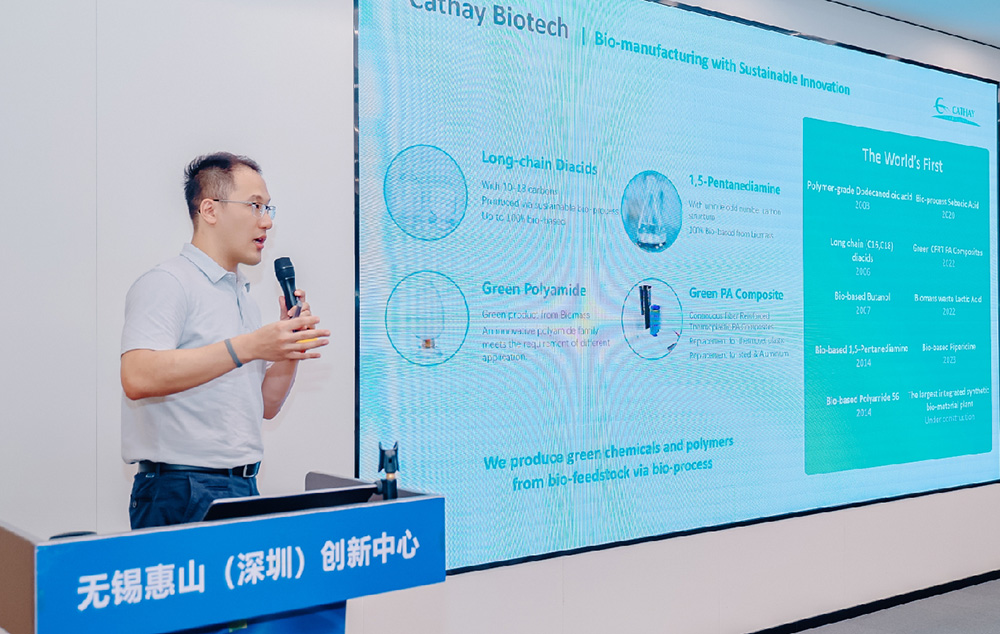
Cathay Biotech Participates in China-Africa Industrial Cooperation Roadshow to Forge Precise Links Between Chinese and African Innovation Ecosystems
2025-09-29
Cathay Biotech Showcases Latest Bio-based Polyamides and Composites at NPE in the US
2024-05-09
